One Scoop Protein: How Many Grams Do You Get?
On this page
- How do you read protein per scoop correctly?
- Should you weigh powder or rely on the scoop?
- How much protein should come from a shake?
- Are the old brand-by-brand scoop numbers reliable?
- Does a scoop guarantee muscle gain or fat loss?
- Do you need a scoop immediately after training?
- What should you check if whey causes discomfort?
- Frequently asked questions about one scoop protein
- The bottom line
- Sources
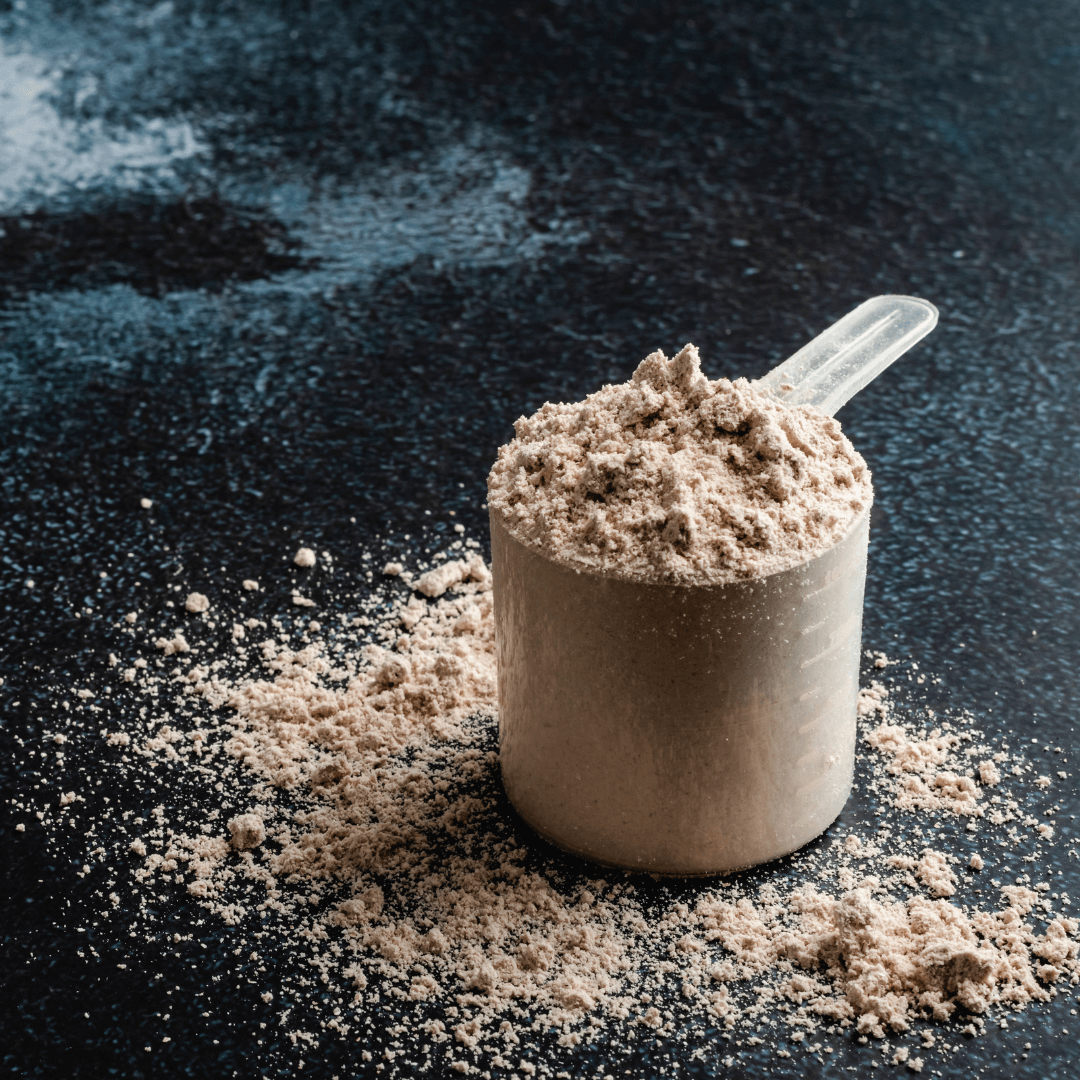
One scoop protein is not a fixed amount: a hypothetical 30 g serving labelled 24 g protein supplies 24 g protein, not 30 g. The rest of that serving consists of other ingredients and nutrients. Use the nutrition panel for your exact product, flavour and serving size instead of a number copied from another brand.
A scoop measures volume, while a serving label usually specifies a weight of powder. Those are related, but they are not interchangeable across tubs. For an Indian gym-goer comparing products, the useful question is how many grams of protein your measured portion supplies and whether you need that amount.

How do you read protein per scoop correctly?
Find the serving size in grams, protein per serving and the preparation instructions. Check whether the panel describes dry powder or a shake prepared with milk. If milk is included in the stated numbers, do not attribute all that protein to the powder.
In our hypothetical example, 24 divided by 30 equals 0.8. That means 80% of the labelled powder weight is protein. A different powder could provide 28 g protein in a 40 g serving, which is 70%; its larger serving provides more protein, but a lower protein fraction.
Do the comparison with the panel on the pack you will actually use. Flavours, regional versions and formula updates can change the label. “One scoop” is not a standard nutritional unit that every manufacturer must fill with the same amount of protein.
Should you weigh powder or rely on the scoop?
A kitchen scale makes the amount you use easier to repeat. Place a suitable container on the scale, tare it to zero and add the labelled weight of powder. Avoid assuming a heaped scoop matches instructions for a level scoop.
If your measured portion differs from the label serving, adjust proportionately. Using our 30 g powder and 24 g protein example, 15 g powder supplies 12 g of labelled protein. This calculation assumes the powder is evenly mixed; it is label arithmetic, not a laboratory test.
When you change tubs, check again. A scoop left over from an earlier product may hold a different weight of the new powder. Keeping the old plastic scoop does not preserve the old serving’s nutritional value.
How much protein should come from a shake?
Start with the day’s food rather than the scoop. A healthy exercising adult may use a general total-protein planning range such as the ISSN’s 1.4–2.0 g/kg/day, but that includes meals and supplements. It is not a prescription to take that many grams of whey powder.
For a worked food-gap example, suppose an appropriate plan calls for 110 g protein and your meals supply 90 g. The remaining gap is 20 g. You could cover it with suitable food or enough powder to provide that amount; the opening example’s full 24 g serving would not be compulsory.
Estimate normal portions of dal, curd, paneer, soy, eggs or meat using reliable food data or labels. Recheck when your routine changes. Someone with a medical condition or prescribed protein restriction needs individual advice rather than this adult fitness calculation.
Are the old brand-by-brand scoop numbers reliable?
A brand name alone is insufficient. Optimum Nutrition Gold Standard, Myprotein Impact Whey, MuscleBlaze and Isopure each need an exact product and serving identified before a comparison is useful. This revised guide does not present the old article’s generic scoop figures as current verified label data.
The original MuscleBlaze product reference and Isopure shopping reference are retained for continuity. They are commercial links, not independent verification of nutrition or product quality. Read the current pack before recording a serving.
When comparing two products, make a small note of serving weight, protein grams, calories and price. Keep the flavour and pack size beside those figures. This avoids comparing one product’s dry powder with another product’s prepared drink or a different variant.
Does a scoop guarantee muscle gain or fat loss?
A measured serving contributes protein to your diet. It does not determine the result of your training programme or guarantee faster recovery. Keep a realistic resistance-training routine and judge progress over time rather than expecting the scoop to produce a visible transformation.
Count the complete shake if managing body weight. Milk, oats, banana and peanut butter contribute their own nutrients and calories. Adding whey to usual meals is a different dietary change from replacing another snack with it.
Also, read Amino Acids and Overall Health: What You Need to Know
Do you need a scoop immediately after training?
Post-workout use can be convenient when a meal is delayed. It is not necessary to treat 30–60 minutes as a compulsory deadline for everyone. Meal timing, daily intake and your tolerance provide more context than the time on the gym wall.
A shake at breakfast may solve a more consistent gap than one after exercise. Pick the time that helps you maintain your eating routine. Do not automatically add other supplements because a scoop is described as needing a “stack”.
What should you check if whey causes discomfort?
Whey comes from milk and is not vegan. A dairy vegetarian may use an appropriate formula, but a person avoiding all animal products needs a suitable alternative. Pea and soy powders are plant proteins, not plant-derived whey.
Lactose intolerance and milk allergy are different. Isolate is not automatically lactose-free, and a milk-allergic person should not switch to isolate as a workaround. If digestive symptoms persist, stop the product and seek advice rather than repeatedly changing the portion without understanding the cause.
Frequently asked questions about one scoop protein
Is one scoop always 25 g protein?
No, protein per serving depends on the exact product and portion. Check serving weight and protein grams separately.
Can I take half a scoop?
A smaller measured portion can fit a smaller dietary gap. Use the labelled powder weight and calculate its protein contribution proportionately.
Can I reuse another brand’s scoop?
You can use it as a utensil, but not as proof of serving weight. Weigh the new powder against its own instructions.
Does mixing with milk add protein?
Milk contributes its own protein and calories. Record both ingredients rather than assigning the complete shake’s nutrition to the powder.
Should everyone take one scoop daily?
No, assess meals and needs first. Daily use is optional when ordinary food already covers the plan.
Is a scoop a complete meal?
A plain whey serving is not equivalent to a varied meal. Use it for a specific protein gap while keeping a balanced food routine.
The bottom line
Treat one scoop protein as a label-reading question rather than a universal dose. Measure powder and count the grams of protein it supplies. Fit that amount alongside meals and account for the complete shake. Recheck the label whenever you change products.
Sources
ISSN position stand: protein and exercise
ISSN position stand: nutrient timing
NIDDK: lactose intolerance and milk allergy


