Fairlife Protein Shake: Labels and India Buying Guide

On this page
- Which Fairlife shake are you looking at?
- What does the label comparison tell you?
- Is it dairy-free or just lactose-free?
- When would a ready-to-drink bottle be useful?
- Can it replace a meal or make you lose weight?
- Can you buy it in India?
- How should you store the bottles?
- Frequently asked questions about Fairlife Protein Shake
- The bottom line
- Sources
Fairlife protein shake is not one fixed formula: the US chocolate labels list 26 g protein for Core Power, 42 g for Core Power 42 g and 30 g for Nutrition Plan. These are different products and bottle sizes. Check the exact bottle before applying a nutrition figure, storage instruction or price comparison.
For a buyer in India, the questions extend beyond protein grams. Identify the range, verify the seller and final delivered cost, and check the remaining shelf life. A convenient ready-to-drink bottle may solve a travel problem, but importing a case is not automatically the best-value way to cover daily protein needs.
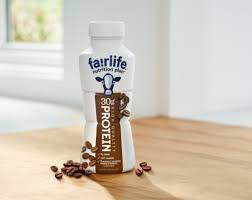
Which Fairlife shake are you looking at?
Core Power and Nutrition Plan are distinct milk-based ranges. The comparison below uses official US chocolate product pages checked on 12 October 2026. It should not be treated as a universal panel for every flavour, regional pack or future formula.
| US chocolate product | Bottle | Protein | Calories | Total sugar |
|---|---|---|---|---|
| Core Power | 414 mL | 26 g | 170 kcal | 5 g |
| Core Power 42 g | 414 mL | 42 g | 230 kcal | 7 g |
| Nutrition Plan | 340 mL | 30 g | 150 kcal | 2 g |
Use the bottle you receive as the final reference. Confirm the product name, flavour, size and serving count rather than trusting a marketplace title or photograph alone. The old article’s generic “around 20 g” answer does not describe these three products.
What does the label comparison tell you?
The largest protein number does not automatically identify the right drink. Choose from the gap in your diet and the portion you want to consume. A 42 g bottle may supply more than the gap you are trying to fill, while a different range may suit your preferred calorie or portion size.
Total sugar and added sugar are separate label lines. The two chocolate Core Power pages list no added sugars, while still containing total sugars. Do not describe a drink as sugar-free merely because its added-sugar line is zero.
Ingredients matter as well. Flavouring, sweeteners and other formula ingredients can differ between ranges. A low sugar number alone is not a complete measure of suitability for a particular person or a reason to call the product healthier than every alternative.
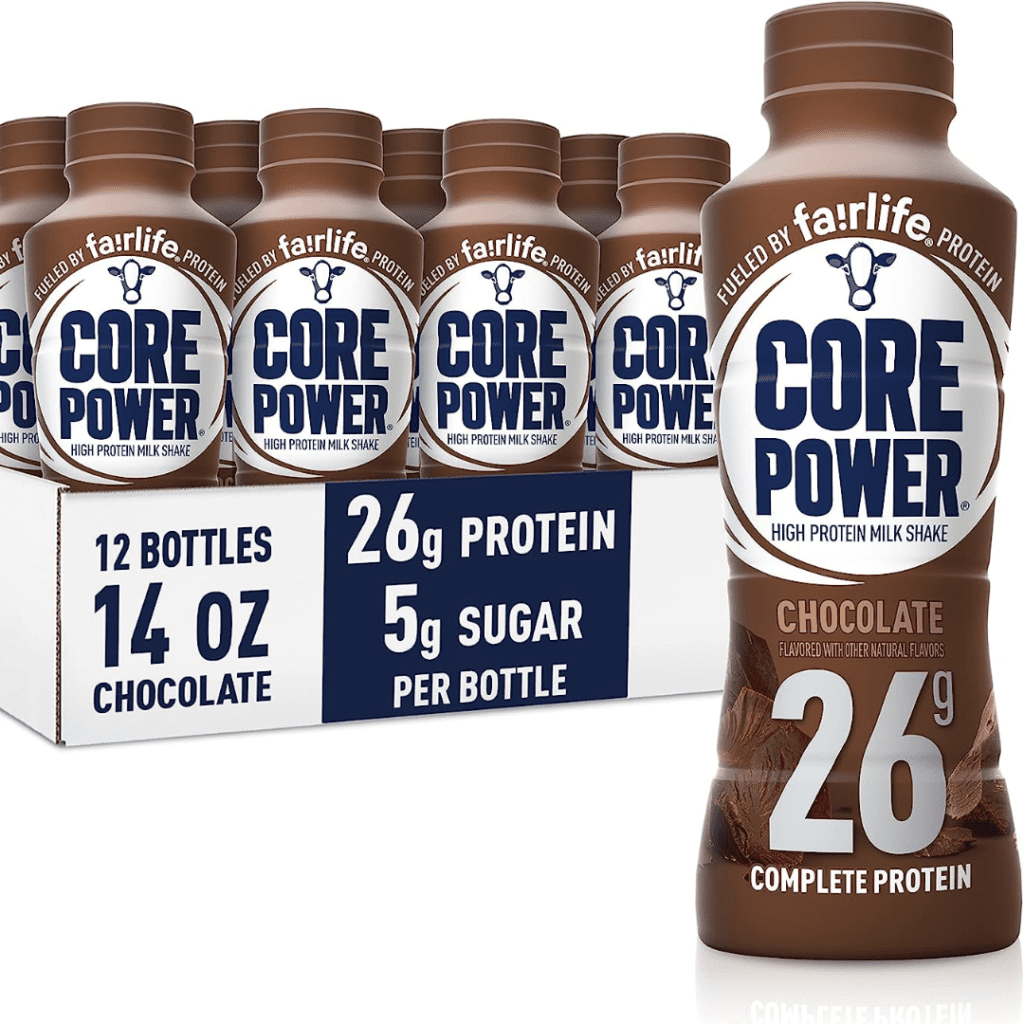
Is it dairy-free or just lactose-free?
Fairlife’s official FAQ describes Core Power and Nutrition Plan as lactose-free milk-based shakes, using filtration and lactase enzyme. Lactose-free does not mean dairy-free. Their product panels explicitly declare that they contain milk.
These are not vegan drinks and are not appropriate workarounds for a milk allergy. Someone managing lactose intolerance should still check the exact bottle and individual tolerance. The brand description is not a guarantee that every user will be free of digestive symptoms.
Do not assume all the protein is added whey powder. The brand describes the drinks as using ultra-filtered milk. That is different from preparing a scoop of whey isolate in water, even though both can contribute protein to a diet.
When would a ready-to-drink bottle be useful?
It may be convenient when you cannot prepare food or mix powder, such as during travel or between work and training. Start with what the rest of the day supplies rather than treating a branded bottle as mandatory after exercise. Ordinary food can also cover a protein gap.
A drink is not a personalised training programme or a promise of reduced soreness. Use it where it makes your eating routine easier, while keeping suitable meals and recovery in the plan. Buying the higher-protein range does not by itself create better gym progress.
Can it replace a meal or make you lose weight?
Do not assume a protein shake is nutritionally equivalent to a varied meal. A bottle can contribute nutrients, but protein content alone does not describe the whole meal pattern you need. If breakfast is difficult, plan a practical breakfast rather than automatically replacing it with a drink every day.
Count the bottle’s calories and anything you add to it. Blending with banana, oats or nut butter changes the complete serving. Adding a shake on top of existing intake is different from replacing another snack, so the product cannot determine weight change on its own.
Can you buy it in India?
The original Ubuy Core Power shopping reference and Ubuy India site are retained. A retrieved cross-border listing is not proof of current local stock, official Indian distribution or a final delivery-inclusive price. Verify those details before paying.
Check whether you are ordering one bottle or a case, the range supplied, seller information, shipping charges and any additional charges shown at checkout. Ask about expiry and the condition of the delivered packaging. An imported drink is only convenient if the purchase and storage arrangements work for you.
Compare final cost per bottle or per amount of labelled protein. For example, a hypothetical ₹300 bottle providing 30 g protein costs ₹250 per 25 g protein. This is arithmetic, not a current Fairlife price or an endorsement; compare with available foods and products on the same basis.
How should you store the bottles?
The manufacturer says unopened Core Power is shelf-stable at room temperature and opened portions need refrigeration. Nutrition Plan is described as shelf-stable unopened in a cool, dry place, with opened portions refrigerated. Always follow the exact bottle’s current instructions and date.
Shelf-stable does not mean a bottle can be stored indefinitely or exposed to any transport conditions. Check packaging integrity on arrival. The old article’s vague “a few days” instruction is replaced here with the product label as the reference rather than one rule for every Fairlife milk product.
Also, read Muscleblaze Protein Oats: The Perfect Blend Of Nutrition And Taste
Frequently asked questions about Fairlife Protein Shake
How much protein is in one bottle?
It depends on the range and variant. The chocolate examples above provide 26 g, 42 g or 30 g rather than one universal figure.
Is Fairlife protein shake vegan?
No, these ranges are milk-based. Lactose-free wording does not make them plant-derived.
Can someone with a milk allergy drink it?
The listed products contain milk. Do not treat lactose-free status as a workaround for a milk allergy.
Is the 42 g range always better?
A larger protein amount is not a universal advantage. Match the product to your dietary gap, portion preference and cost.
Is it automatically suitable for children over 12?
This guide does not establish that age-based safety rule. Ask a paediatric clinician or dietitian about a child’s needs and the specific product.
Does an online listing prove Indian availability?
It does not confirm present stock or the final delivered cost. Check the seller, selected variant and checkout details.
The bottom line
Choose a Fairlife protein shake by its exact range and bottle label. Separate lactose-free status from dairy-free or allergy-safe claims. Compare the final delivered cost and follow current storage instructions. Use the drink for a practical dietary gap rather than a promised fitness result.
Sources
Fairlife: Core Power chocolate 26 g nutrition panel
Fairlife: Core Power chocolate 42 g nutrition panel
Fairlife: Nutrition Plan chocolate nutrition panel
Fairlife: product identity, lactose and storage FAQs


