Amul High Protein Cubes Review: Price, Nutrition & Ingredients
Amul High Protein Cubes review: check ₹80 serving price, 25g protein, 150 calories, ingredients, allergens, flavours, uses and buying verdict.
On this page
- Amul High Protein Cubes: quick facts
- What is the price of Amul High Protein Cubes?
- How nutritious are Amul High Protein Cubes?
- What are the ingredients?
- What flavours are available and how do you eat them?
- Are Amul High Protein Cubes good for weight loss?
- How do they compare with other protein options?
- What should you check before buying?
- Final verdict: are Amul High Protein Cubes worth it?
- Frequently asked questions
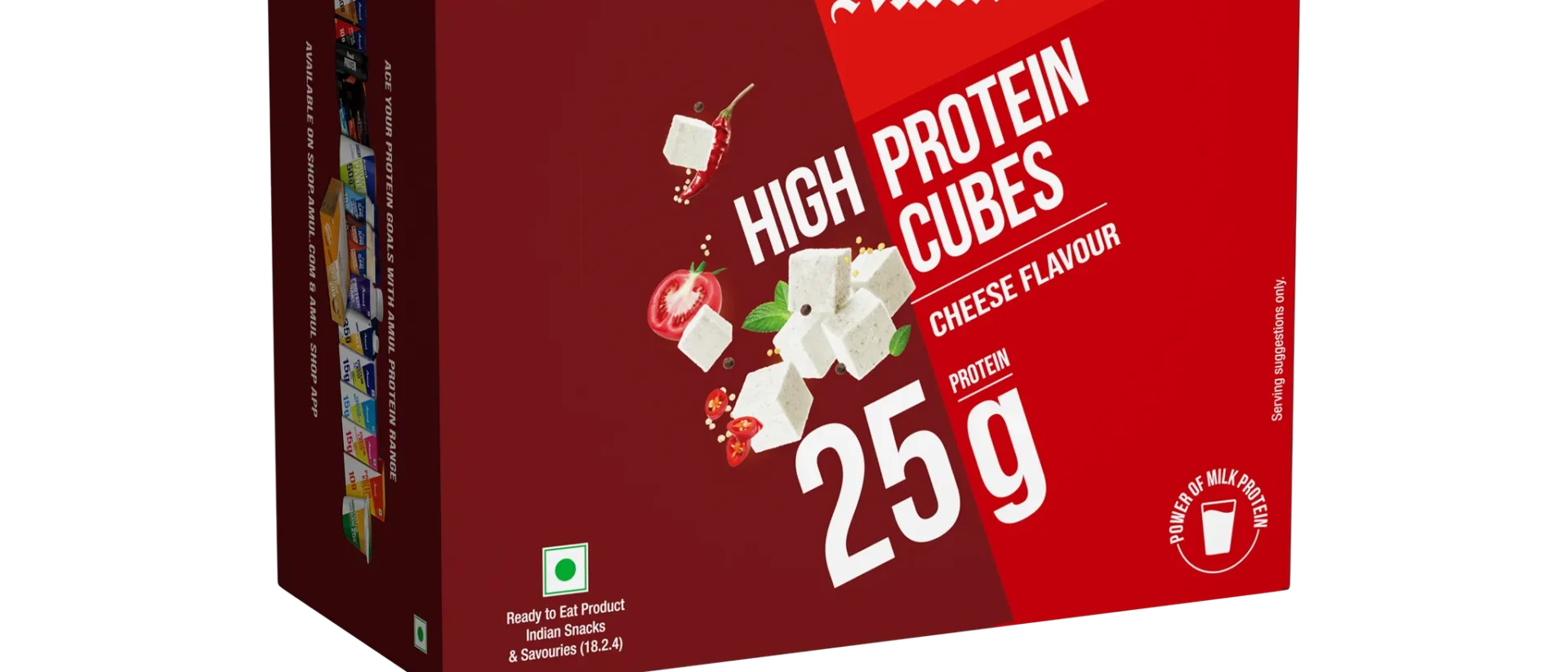
Updated November 2026: Amul High Protein Cubes are a ready-to-eat milk-protein snack sold as a 190 g box containing five 38 g packs. Amul states that each pack provides 25 g protein and 150 kcal. The official shop lists the five-pack box at ₹400, equivalent to ₹80 per serving, although it was marked sold out when checked.
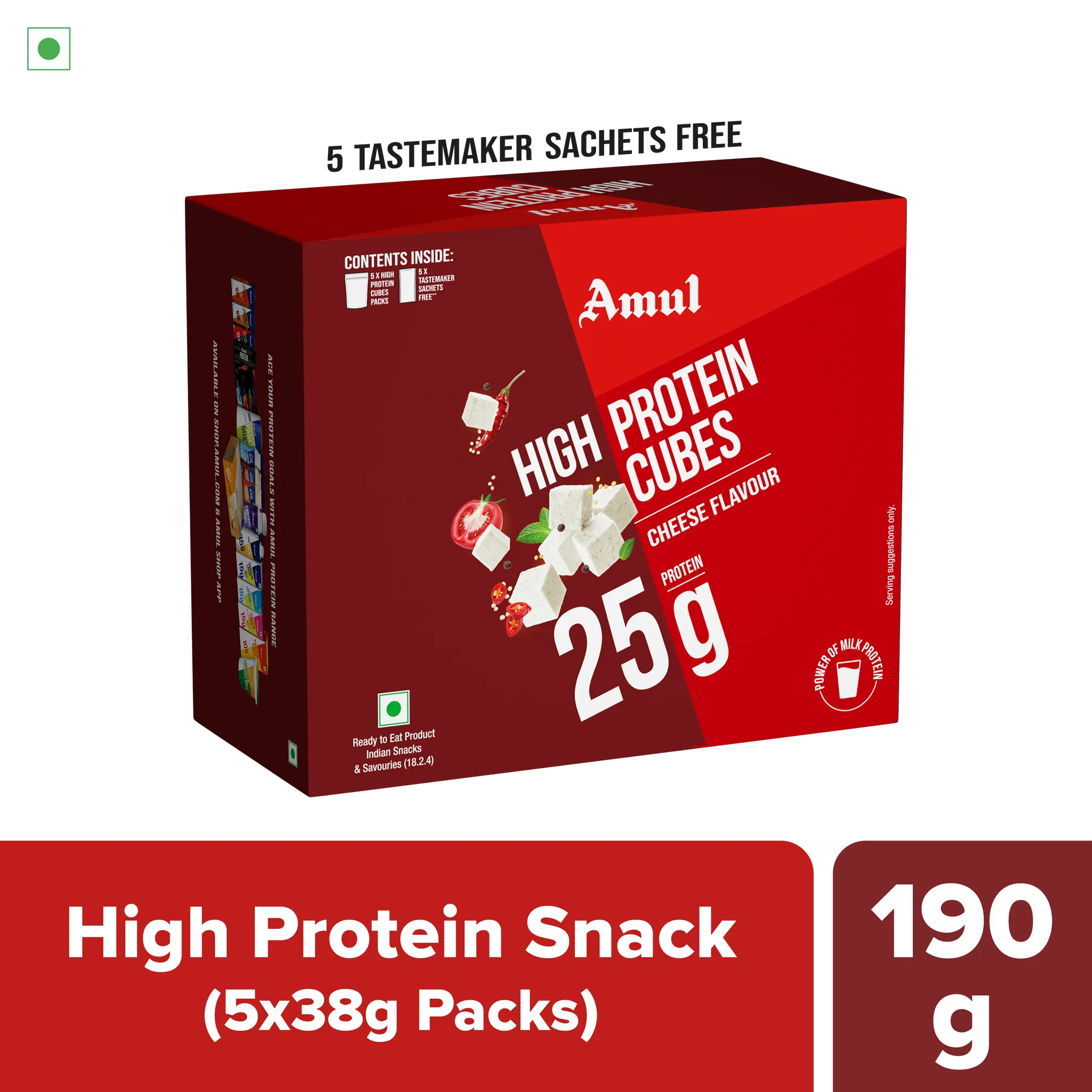
Amul High Protein Cubes stand out because 25 g protein is packed into a small 38 g savoury serving. That is about 65% protein by weight. This review checks the price, official ingredients, protein-to-calorie ratio, ways to use the cubes and the label details buyers should examine before treating them as an everyday snack.
Amul High Protein Cubes: quick facts
| Detail | Official listing |
|---|---|
| Box size | 190 g |
| Servings | Five packs of 38 g |
| Protein | 25 g per 38 g pack |
| Energy | 150 kcal per pack |
| Protein source | Milk protein |
| Official listed price | ₹400 per box; ₹80 per pack |
| Official ingredients shown | Milk solids, iodized salt, acidity regulator (575), nature-identical cheese flavouring |
| Availability when checked | Sold out on Amul Shop |
The figures above come from the official Amul Shop product page. Prices, stock and formulations can change, so recheck the current page and physical label before purchasing Amul High Protein Cubes.
What is the price of Amul High Protein Cubes?
The official maximum retail price shown is ₹400 for a box of five 38 g packs. This makes the price ₹80 per single serving. With 25 g protein per serving, the cost is approximately ₹3.20 for each gram of protein. That figure is useful for comparison, but it does not measure ingredient preference, taste, sodium, convenience or overall diet quality.
For Amul High Protein Cubes, the store also displays a unit price of about ₹2.11 per gram of product. Do not confuse price per gram of product with price per gram of protein: they answer different questions. For protein-value comparisons, ₹80 divided by 25 g protein is the clearer calculation.
At ₹80, Amul High Protein Cubes cost more than many ordinary packaged snacks but deliver considerably more stated protein than typical chips or namkeen. They may still cost more than eggs, milk, curd, dal or home-cooked paneer per gram of protein. Convenience, portability and shelf instructions should therefore be part of the comparison.
Are the cubes good value?
They look competitive for buyers who want a compact, savoury 25 g protein portion without mixing a shake. Value is weaker if the buyer is comfortable preparing lower-cost protein foods at home. The fair verdict is that the product offers convenience at a visible premium, not that it is automatically the cheapest protein in India.
Stock is another limitation. The official listing was sold out when checked in November 2026. Do not pay an inflated resale price without checking the official ₹400 reference, seller credibility, expiry date, storage history and pack integrity. Buy from authorised channels wherever possible.
How nutritious are Amul High Protein Cubes?
Amul states that one 38 g serving supplies 25 g protein and 150 kcal. Protein therefore contributes about 100 kcal, using the standard four kilocalories per gram calculation. The remaining energy must come from other macronutrients, but the official web listing does not show a full panel for fat, saturated fat, carbohydrate or sugar.
The protein density is high: 25 g out of 38 g is roughly 65.8% by weight, consistent with Amul’s rounded 65% description. That makes Amul High Protein Cubes unusually compact compared with common whole-food snacks. High protein density, however, is not the same as a complete meal.
A useful snack also needs to fit the person’s total intake. Buyers should inspect sodium, saturated fat and the seasoning sachet on the physical pack. Iodized salt appears in the ingredient list, and the seasoning can add more salt or flavouring. People following a clinician-directed sodium restriction should not rely only on front-of-pack protein.
Is 150 kcal for 25 g protein a good ratio?
For someone prioritising protein within a limited calorie budget, 25 g protein for 150 kcal is a strong ratio. About two-thirds of the stated calories can be mathematically attributed to protein. The remaining nutrition profile and the complete day’s diet still matter, especially when the snack replaces fruit, vegetables or other nutrient-dense foods.
What are the ingredients?
The official page lists milk solids, iodized salt, acidity regulator 575 and a nature-identical cheese flavouring substance. Acidity regulator 575 is glucono delta-lactone, a permitted food additive used for functions such as acidification or setting. Its presence should be stated plainly rather than framed as automatically harmful or beneficial.
Because milk solids are the base, Amul High Protein Cubes contain milk and are unsuitable for anyone with a milk-protein allergy. People with lactose intolerance should not assume the cubes are lactose-free unless the pack explicitly says so. Milk-protein allergy and lactose intolerance are different conditions and require different precautions.
The website’s short ingredient list appears to describe the cheese-flavoured product presentation. Every seasoning sachet may have its own ingredients and allergen declaration. Check the actual pack for wheat, soy, nuts or other allergens, and review sodium, sweeteners or added flavours if those are important to you.
Are Amul High Protein Cubes vegetarian?
The product uses milk protein, so it is dairy-based rather than vegan. Indian packaged foods should display the applicable vegetarian or non-vegetarian symbol on the physical label. Buyers following a strict vegetarian diet should confirm that symbol and the exact flavour ingredients before eating.
What flavours are available and how do you eat them?
Launch reporting described five seasoning options: Peri Peri, Korean Kimchi, Tandoori, Cheese & Herbs and Tomato. The official page confirms five seasoning flavours but does not list all of their ingredient panels. Availability may change after launch.
Amul recommends eating the cubes directly, shaking them with the supplied seasoning, adding them to gravies, using them as a crunchy element in bhel, or placing them in soup like croutons. These uses make Amul High Protein Cubes more flexible than a sweet protein bar or drink.
This article does not claim a first-hand taste test. Texture and flavour opinions require actually tasting the product, and the official page had only a small number of customer reviews when checked. A responsible review separates verified label facts from personal sensory experience.
Simple serving ideas
For a quick snack, shake one pack with its tastemaker and serve it with cucumber or fruit. For a meal, add the cubes to a vegetable gravy, soup or salad and include a carbohydrate source as appropriate. For bhel, combine cubes with onion, tomato, coriander and chutney, while remembering that sauces and seasoning change sodium and calories.
Are Amul High Protein Cubes good for weight loss?
Amul High Protein Cubes can fit a calorie-controlled diet because each portion has a stated 150 kcal and 25 g protein. They do not independently burn fat or guarantee weight loss. Results depend on total energy intake, activity, sleep, medical factors and the overall eating pattern.
Portion control is straightforward because the box contains separate 38 g packs. However, eating several servings or adding calorie-dense chutneys and gravies changes the calculation. Treat the nutrition values as per pack, not per box.
Are they useful for muscle gain?
The cubes can contribute 25 g protein to a meal or snack, making them convenient for people who struggle to reach an appropriate daily protein intake. Muscle gain still requires progressive resistance training, adequate total energy, recovery and a varied diet. No packaged snack replaces those basics.
Protein needs differ by body size, training and health status. People with kidney disease or another condition affecting protein intake should follow their clinician’s advice. More protein is not always better, and the ideal amount cannot be determined from the product label alone.
How do they compare with other protein options?
| Option | Why someone may choose it | What to check |
|---|---|---|
| Amul High Protein Cubes | Savoury, compact, ready to eat, 25 g stated protein | Stock, complete label, sodium and seasoning allergens |
| Whey protein | Measured protein and many flavour choices | Water or milk needed; sweet taste may not suit everyone |
| Paneer or curd | Familiar whole-food dairy formats | Refrigeration, fat, lactose and serving size |
| Eggs | Affordable and versatile for many households | Cooking and individual dietary preferences |
| Roasted pulses | Plant-based fibre and crunch | Different protein density and carbohydrate content |
Our broader guide to high-protein snacks can help compare formats. Choose according to your full diet, food allergies, budget and access—not because one snack has the largest number on the front.
What should you check before buying?
First, confirm the seller and current price against Amul Shop. Second, inspect the expiry date and sealed pack. Third, read the full nutrition panel, especially sodium, fat and serving size. Fourth, examine each seasoning’s allergen statement. Finally, follow the storage directions printed on the box.
Online listings can be abbreviated. The physical label is the deciding source for formulation, batch information, FSSAI licence details, best-before date and storage. If the box and online page disagree, contact Amul before consuming the product.
Final verdict: are Amul High Protein Cubes worth it?
Amul High Protein Cubes offer an unusually protein-dense savoury format: 25 g protein and 150 kcal in a 38 g pack, priced at ₹80 per serving in a five-pack box. They are most attractive to people who want portable milk protein without a shaker or sweet flavour.
The main cautions are milk allergen exposure, missing full nutrition details on the web listing, seasoning-specific ingredients and uncertain stock. The ₹3.20 cost per gram of protein is useful, but buyers should also compare sodium, taste preference, convenience and the price of ordinary foods.
Bottom line: Amul High Protein Cubes are a promising convenience snack rather than a nutritional shortcut. They may be worth trying at the official price if you tolerate dairy and want savoury protein, but the complete physical label should guide regular use.
Frequently asked questions
What is the price of Amul High Protein Cubes?
The official listing shows ₹400 for a 190 g box containing five 38 g packs. That equals ₹80 per pack, although current price and stock should be rechecked.
How much protein is in each pack?
Amul states that one 38 g pack contains 25 g protein. The company describes this as approximately 65% protein by weight.
How many calories are in one serving?
One 38 g serving is listed at 150 kcal. The value applies per individual pack, not to the full five-pack box.
What are Amul High Protein Cubes made from?
The official page lists milk solids, iodized salt, acidity regulator 575 and nature-identical cheese flavouring. Check the physical pack for the complete seasoning ingredients and allergens.
Are the cubes lactose-free?
The official listing reviewed does not make a lactose-free claim. Anyone with lactose intolerance should verify the pack, while anyone with a milk-protein allergy should avoid the milk-based product.
Can the cubes help with weight loss?
They can fit a calorie-controlled plan, but no single snack causes weight loss. Account for the full meal, seasonings and total daily intake.
How can you eat them?
Amul suggests eating them directly, shaking them with seasoning, adding them to gravies or soups, or using them in bhel. Follow the pack’s storage and serving instructions.
Where can you buy them?
The official sales channel is Amul Shop, subject to stock and delivery serviceability. The product was marked sold out when this article was updated in November 2026.
Sources checked: the official Amul Shop listing and contemporaneous launch coverage. General packaged-food labelling is governed by FSSAI. Prices, formulation and availability can change.