Yoga Bricks: How to Choose and Use Yoga Blocks
oga bricks, also known as yoga blocks, are simple props that can enhance your yoga practice. They're typically made of foam or cork, but you can also find them in wood or bamboo.
On this page
- What are yoga bricks used for?
- How many yoga bricks should you buy?
- Should you choose foam, cork or wooden yoga bricks?
- How can beginners use yoga bricks in standing poses?
- Can yoga bricks help with seated practice?
- What should you avoid when using yoga bricks?
- How should you check and maintain yoga bricks?
- Frequently asked questions about Yoga Bricks
- The bottom line
- Sources
For a beginner, 2 yoga bricks provide matching support under both hands when the floor is difficult to reach. Yoga bricks, also called yoga blocks, can reduce the reach required in a pose and make supported positions easier to arrange. A yoga brick should help you practise comfortably rather than push you into a deeper stretch.
What are yoga bricks used for?
Yoga bricks are firm props placed on the floor to create a raised contact surface. A rectangular brick has 3 possible orientations, so the support height can change without changing the prop. In Trikonasana, for example, a brick can bring the floor closer to your lower hand.
Yoga bricks are useful when reaching the floor makes you round your back, lose balance or strain to hold a position. The support should allow ordinary breathing and a controlled exit.
How many yoga bricks should you buy?
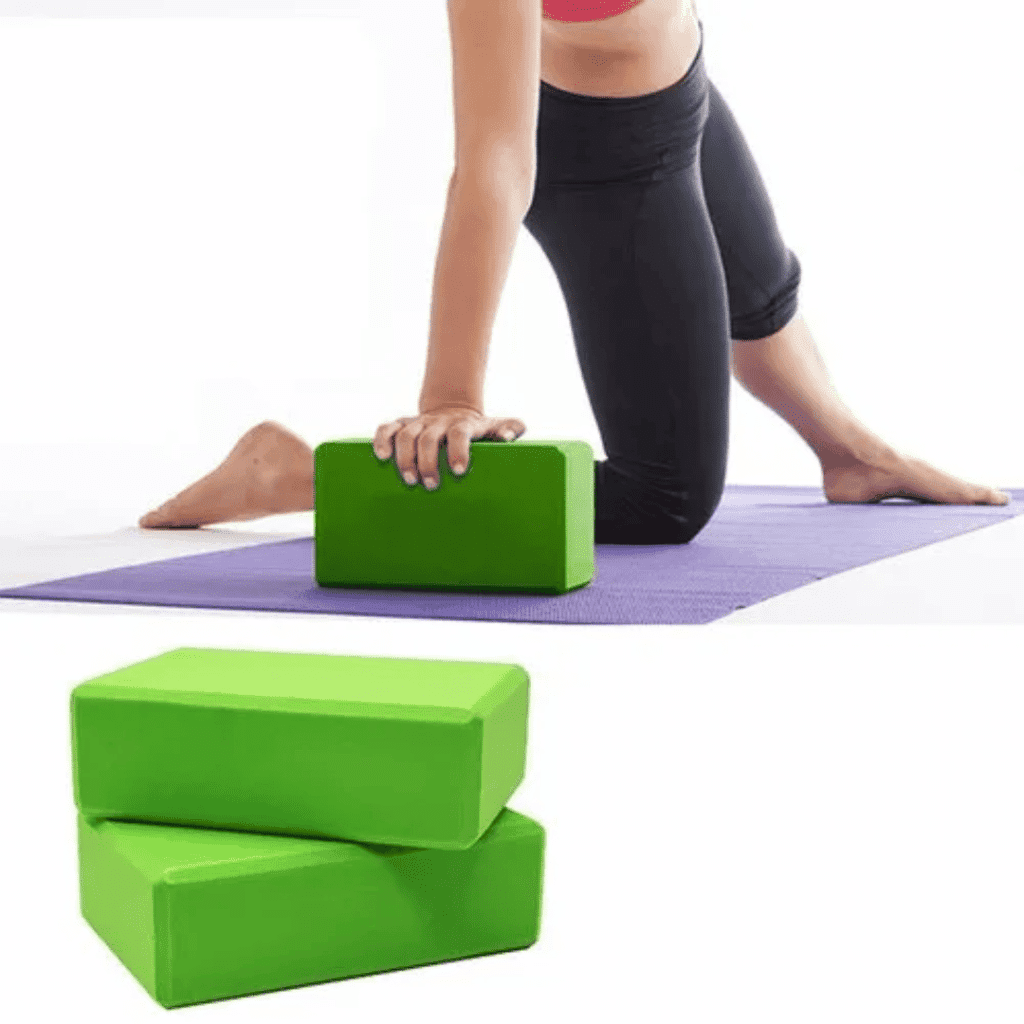
A pair of 2 matching yoga bricks is a practical starting choice for home practice. One brick can still work for a pose using one hand, such as a carefully taught standing triangle.
Yoga brick dimensions should be checked in centimetres before ordering in India. A product measuring approximately 23 × 15 × 10 cm corresponds to the 9 × 6 × 4 inch example in the original guide, but manufacturers sell other sizes.
Should you choose foam, cork or wooden yoga bricks?
Yoga brick material affects cushioning and how the prop feels under pressure. Foam often feels softer, while cork and wood are typically firmer; actual firmness depends on the product. For 2 otherwise similar bricks, test compression and grip rather than assuming material alone guarantees stability.
| Material | Useful feature | What to check |
|---|---|---|
| Foam | Softer contact in supported positions | Compression under pressure and a grippy surface |
| Cork | Firm contact for many standing positions | Surface finish, edges and product condition |
| Wood | Rigid support with little cushioning | Smooth edges, grip and comfort against the body |
Original yoga-brick shopping links (affiliate links): Foam Yoga Brick; Cork Yoga Brick; Wood Yoga Bricks. These links are retained for comparison, not as a tested ranking. Check the current seller’s dimensions, return terms and product information; no current price or stock claim is made here.
How can beginners use yoga bricks in standing poses?
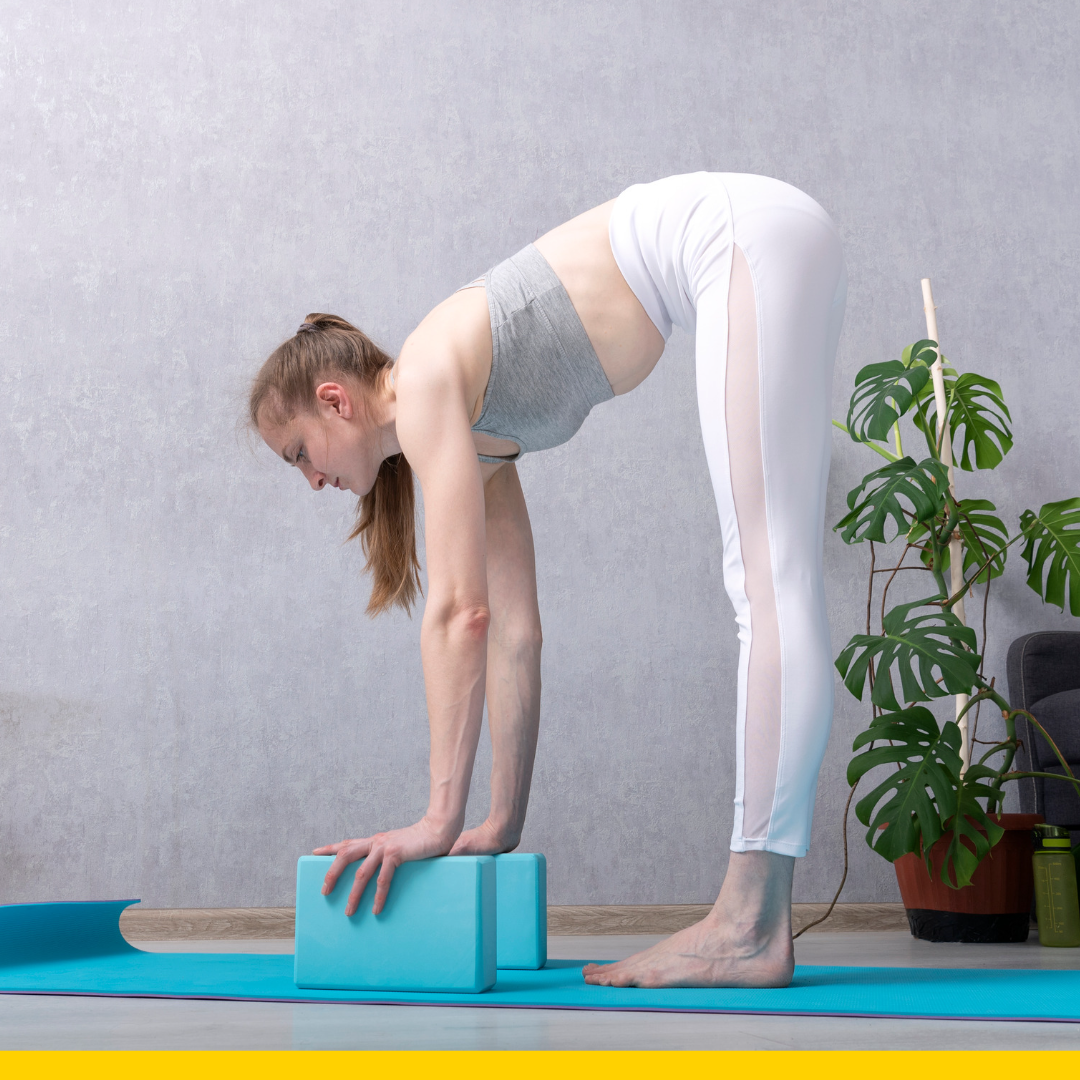
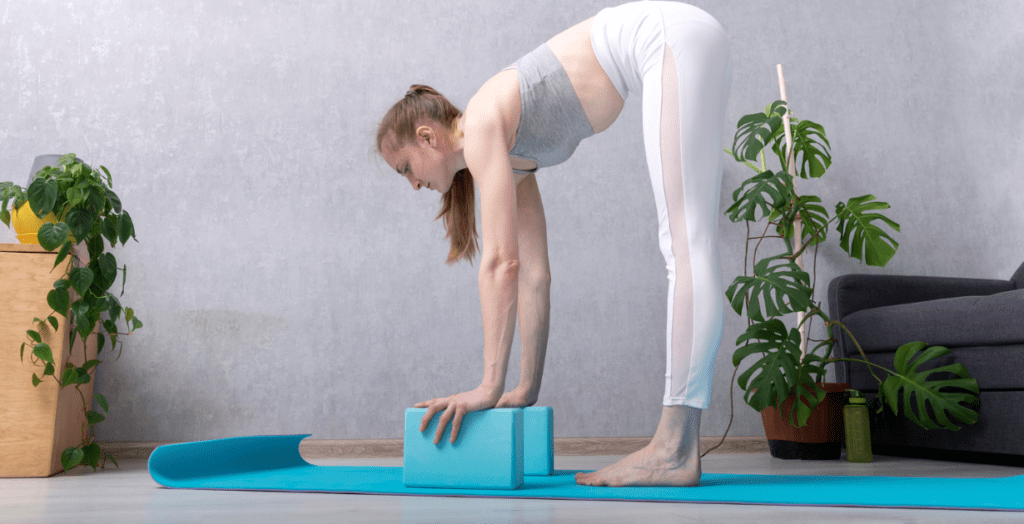
In a standing forward fold, place 2 yoga bricks on a non-slip surface where your hands can rest comfortably. Begin with generous support and bend your knees as needed. Keep the blocks steady and avoid shifting your full weight onto a narrow, wobbling edge.
In Trikonasana, place 1 yoga brick beside the front foot where your teacher recommends. Rest your lower hand lightly on the support rather than collapsing onto the prop. Reduce the reach or change the block orientation if maintaining balance requires strain.
In Ardha Chandrasana, a yoga brick can shorten the reach for the supporting hand, but balance remains a separate skill. Begin with a wall or supervised modification instead of assuming 1 block prevents a fall. Stop the pose if the block slips or the standing leg feels unstable.
Can yoga bricks help with seated practice?
A yoga brick can raise the pelvis during a comfortable seated position, depending on body proportions and the prop’s shape. Start with 1 low, stable support and check for pressure against the sitting bones. A folded blanket may be more comfortable than a hard block for meditation.
For a seated forward fold, yoga bricks should not become handles for pulling your torso towards your feet. Keep the range comfortable and let a teacher suggest a suitable support position.
What should you avoid when using yoga bricks?
Yoga bricks should not be placed under the neck to improvise a headstand or shoulder stand. A 2013 review of published adverse-event cases identified advanced positions, including these inversions, among the reported problems. Case reports cannot tell us how often injuries occur, but the reports support caution for beginners.
Yoga-brick support does not remove the need for individual advice when a wrist, neck or back is injured. Placing 1 brick under a hand during plank does not reliably unload an injured wrist and can introduce instability. Avoid weight-bearing practice through pain and seek an appropriate modification.
Yoga safety research concerns complete yoga practices rather than proving benefits from a particular brick. A 2015 review found similar reported adverse-event frequencies for yoga versus usual care or exercise, but safety reporting was incomplete. Neither review establishes that a block prevents injury or guarantees flexibility gains.
How should you check and maintain yoga bricks?
Yoga bricks should be inspected before each session for cracks, loose surfaces, moisture and uneven edges. Test each of the 2 bricks with light hand pressure on the actual floor you will use. Follow the manufacturer’s cleaning instructions and let the props dry before storing.
Home yoga practice needs a clear space as well as stable props. A qualified teacher can check your setup and offer a simpler pose when balancing and reaching compete for attention.
Morning or Evening Workouts The Science Behind- Which One Win?
30 Ways To Use Yoga Blocks | Yoga Props | How to use yoga blocks — the original video link is retained as a supplementary resource, not medical guidance.
Additional supplement listings from the original article (affiliate links): Listing 1; Listing 2; Listing 3; Listing 4; Listing 5.
Frequently asked questions about Yoga Bricks
Are yoga bricks and yoga blocks the same?
Yoga bricks and yoga blocks usually describe the same type of prop. Product shapes and dimensions vary between sellers. Compare the actual measurements in centimetres rather than choosing by the name alone.
Is one yoga brick enough for a beginner?
One yoga brick can work for poses supporting one hand. Two matching blocks are more convenient when both hands need equal height. A pair is a practical choice rather than a compulsory purchase.
Do yoga bricks increase flexibility?
Yoga bricks can make a position easier to adapt to your current range. Yoga bricks do not guarantee a specific flexibility increase or a faster result. Avoid using the support to force a painful stretch.
Are cork yoga bricks better than foam?
Cork yoga bricks may suit someone who prefers firmer contact. Foam can suit supported positions where cushioning matters. Product construction and personal comfort matter more than a universal material ranking.
Can yoga bricks protect an injured wrist?
Yoga bricks cannot be assumed to protect an injured wrist during weight-bearing poses. Pain, swelling or recent injury needs assessment and a suitable modification. A teacher can help adapt practice within clinical advice.
Can you put yoga bricks under your neck?
Do not improvise a neck support with yoga bricks during inversions. Beginners should avoid advanced inverted poses without appropriate instruction. Neck symptoms, glaucoma or bone-health problems require individual guidance before relevant poses.
The bottom line
Yoga bricks are practical supports for adjusting the reach and comfort of yoga positions. Start with 2 matching blocks if both hands need equal height, and choose the material by stability and comfort. Use the props to reduce strain rather than force extra depth. Pain or an advanced inversion needs suitable guidance rather than another block.
Sources
Cramer and colleagues, 2013: Adverse events associated with yoga — review of published case reports and case series.
Cramer and colleagues, 2015: The safety of yoga — systematic review and meta-analysis of randomised trials.


